
A musty smell after showering usually means moisture is supporting mold, mildew, or bacteria in trapped soap residue and dirt. Porous grout can hold that buildup, but drains, wet fabrics, and hidden leaks can create similar stale conditions.
We recommend finding the cause before using a stronger cleaner. Start by separating grout odor from the other common bathroom sources.
Key Takeaways
- Clean away soap scum and body oils, then dry the grout completely.
- Check drains, curtains, towels, and nearby walls before assuming the grout needs replacement.
- Recurring mustiness with loose tile, persistent dampness, or crumbling grout needs inspection rather than repeated scrubbing.
Why a Musty Grout Smell Gets Stronger After Showering
Porous grout holds moisture and residue
Cement-based grout is porous. It absorbs water and can retain oils, dirt, spills, and bacteria. Mold and mildew grow when water remains alongside a food source, including soap scum, body oils, and grime.
Showering wets the joints and raises bathroom humidity. The stale scent can become more noticeable while those surfaces remain damp. Epoxy grout absorbs much less moisture, but residue on its surface can still smell.
Surface cleaning can leave the cause behind
Mopping may clean the tile while moving dirty water and detergent residue into recessed grout lines. A clean-looking floor can still contain embedded soil.
Bleach may lighten surface staining without removing growth inside porous material. Water left behind can prolong damp conditions. The EPA’s guidance on bleach doesn’t recommend it as a routine mold-cleanup method. Physical removal and moisture control matter more than whitening the joint.
Check Bathroom Odor Sources in This Order
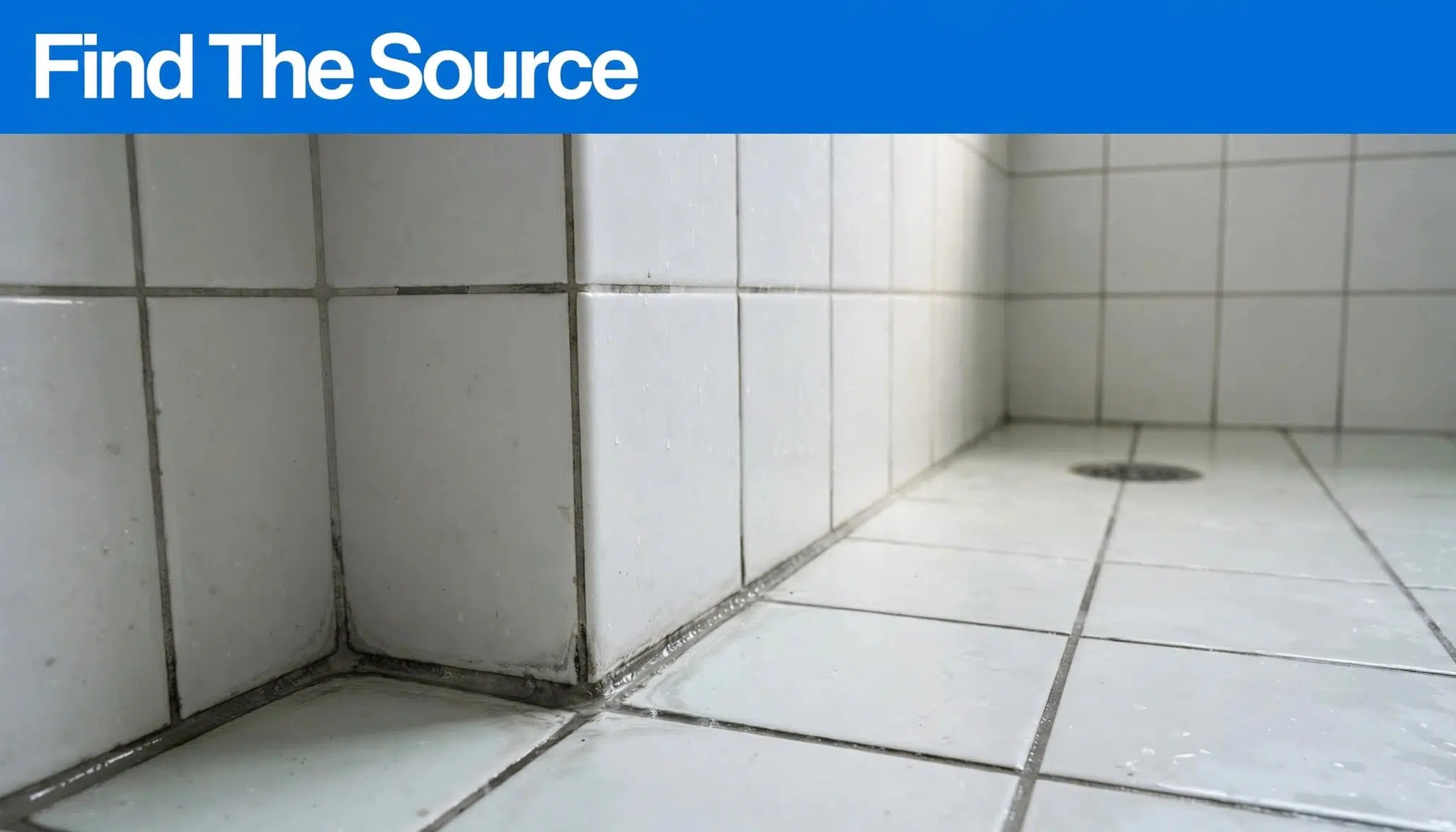
Compare conditions before showering, immediately afterward, and after the room dries. Avoid putting your face against suspected mold.
- Check the grout and caulk. Look for dirty joints, persistent dark patches, and soap buildup. Rubber-like material in corners is usually caulk, not grout. Mold embedded in failed caulk may require replacement.
- Inspect the drain. Remove accessible hair and slime from the cover. A stronger stale scent around the opening points toward drain buildup or a plumbing issue. Sewer-gas signs need separate attention.
- Open the shower curtain. Inspect its lower edge and folds. Also check door tracks, where water and soap residue collect.
- Remove towels and bathmats. Wash them and let the room dry without them. Damp fabric can produce the same stale smell homeowners attribute to grout.
- Look beyond the tile. Check adjacent baseboards, ceilings below the shower, and nearby walls for staining or swelling that could point to a plumbing leak. Loose tile and joints that stay wet after surrounding areas dry suggest a deeper problem.
A small-area cleaning trial helps narrow the source. Clean one affected section, dry it, and compare conditions afterward. Improvement supports a surface-soil explanation, but it doesn’t rule out a leak.
Clean Mildew From Grout Without Damaging Tile

We recommend starting with the least aggressive method. This process suits a small affected area of sound grout beside compatible ceramic or porcelain tile.
- Ventilate and protect yourself. Run the exhaust fan. Wear gloves and splash goggles. Use a properly fitted N95 when cleaning visible mold, and keep anyone with significant respiratory sensitivity away.
- Remove surface residue. Apply a pH-neutral tile cleaner according to its label. Brush gently, rinse, and remove the dirty water.
- Test the treatment. On a hidden area, test a paste made with one part 3% hydrogen peroxide and two parts baking soda. Peroxide can lighten colored grout or affect existing sealers.
- Apply and wait. For a small batch, mix 1/4 cup peroxide with 1/2 cup baking soda. Spread it along the grout and leave it for 10 to 15 minutes.
- Scrub gently. Use a soft-bristle grout brush or toothbrush. Avoid wire brushes, metal scrapers, and heavy pressure.
- Rinse and dry. Remove the paste completely, rinse with clean water, and towel-dry. Keep the shower unused until the surface dries.
Don’t mix peroxide with acetic acid, bleach, ammonia, or other cleaners.
Avoid acetic-acid solutions, lemon juice, and bleach on marble or travertine. Acids can etch these stones; bleach can damage finishes or discolor materials. The Natural Stone Institute’s cleaning guidance explains acid-related damage. Use a stone-safe cleaner instead of this paste on natural stone.
Treat Drain Odors Separately
Remove buildup before trying a deodorizer
Clean accessible hair and slime first. A baking soda and vinegar treatment may help with a light stale scent, but fizzing doesn’t prove the pipe is clean or clear a substantial blockage.
If no drain chemicals are present, add about 1/2 cup baking soda followed by 1/2 cup vinegar. Let it fizz for about 10 minutes, then rinse thoroughly. Use hot tap water rather than boiling water with PVC pipes. Keep acids off nearby natural stone and rinse splashes promptly.
Keep peroxide separate from acidic treatments
For a persistent light organic scent, about one cup of 3% hydrogen peroxide can be left in a compatible drain for 15 to 30 minutes, then flushed with warm water.
Don’t pour it onto the preceding acidic treatment, lemon juice, bleach, or drain opener residue. Use a separate treatment session after thorough flushing. Call a plumber for sewage odor, gurgling, slow drainage, or recurring drain smells. Those conditions may involve a trap or vent problem rather than dirty grout.
When Cleaning Won’t Fix the Odor
Embedded soil may need professional extraction
If grout is firm but still smells after careful cleaning and drying, embedded residue may remain. Our professional tile and grout cleaning uses high-pressure hot-water extraction, a professional cleaning method that loosens and removes soil ordinary mopping leaves behind.
Extraction removes dirty water rather than redistributing it across the floor. It doesn’t repair a leaking shower pan, failed waterproofing, or damaged subfloor. Those problems need repair before cleaning can provide a lasting result.
Loose tile and failed grout need inspection
Replace grout that is missing, crumbling, or repeatedly cracking after the underlying cause is corrected. Regrouting alone won’t resolve tile movement or wet backing materials.
Water trapped beneath loose tiles after a repair can support mildew and dark growth. A tile professional may need to lift affected tiles and inspect the substrate. Black discoloration alone doesn’t identify the mold type.
Three hours is usually too short before wetting a conventional tile repair. Many grout and adhesive systems need at least 24 to 48 hours, and shower exposure can require longer. For example, SimpleGrout’s curing instructions specify three days before water exposure on shower walls and seven days on shower floors.
Keep Shower Grout Dry and Protected
Remove moisture and washable odor sources
Run the bathroom exhaust fan during bathing and for about 20 minutes afterward. Continue longer if surfaces remain wet. The CDC’s mold prevention guidance recommends bathroom fans that exhaust outdoors.
Squeegee tile, remove standing water, and hang the curtain fully open to dry. Wash washable curtains every one to two weeks. Wash towels and bathmats at least weekly, more often in humid conditions, and remove wet towels from the bathroom.
For basement bathrooms, address exterior dampness too. Extend gutter downspouts at least 6 feet from the house and slope soil away from the foundation.
Seal sound grout after cleaning and drying
Grout sealant helps cement joints resist absorbed dirt, stains, and residue that can become musty. It doesn’t waterproof a shower or stop water entering beneath tile.
A useful starting point is resealing grout every one to two years, especially in bathrooms, the kitchen, and high-traffic areas. Actual timing depends on the sealer and use. Epoxy grout generally doesn’t require routine sealing.
Apply sealer only to clean, dry, structurally sound grout. Follow its curing requirements before showering. Between deep cleanings, use a pH-neutral cleaner, fresh rinse water, and prompt drying rather than repeatedly soaking the floor.
Frequently Asked Questions
How long should the smell take to improve?
Surface-related mustiness should lessen after residue is removed and the shower dries. Reassess over the next 24 to 48 hours without using the shower. This is a troubleshooting window, not a guaranteed drying time.
If the smell remains unchanged, returns with the next shower, or accompanies persistent wet patches, investigate another source. Don’t keep applying cleaner while the grout stays damp. Dry-looking grout also doesn’t prove the backing beneath it is dry.
Is hydrogen peroxide better than vinegar for grout?
For light organic staining on compatible, light-colored grout, 3% hydrogen peroxide can be preferable. The acidic alternative can erode cement-based grout or etch natural stone.
Neither treatment resolves the underlying dampness. Test peroxide first because it can alter some grout colors and finishes. Use a pH-neutral cleaner for routine maintenance, and keep all cleaning products separate. A pleasant scent or lighter grout color doesn’t confirm that the odor source is gone.
What smells can be mistaken for mold?
Drain biofilm, damp towels, dirty bathmats, and wet shower curtains can all smell stale or earthy. Sewer gas may be mistaken for a general stale bathroom scent but often has a stronger sewage or sulfur character.
We recommend locating where the odor is strongest rather than diagnosing mold by smell alone. A musty odor without visible growth can also come from concealed damp materials. Persistent odor near loose tiles or damaged walls needs inspection.
Stop the Moisture Before Sealing the Grout
A lasting fix requires clean grout and reliable drying. Remove residue first, then address any leak, drainage problem, or ventilation issue that keeps the shower damp.
For sound tile and grout that need deep cleaning and protection, Get a FREE Quote for tile cleaning and sealing in your home or office. Loose tiles, failed joints, and hidden moisture need inspection before sealing.