
Water absorbed by cement-based grout makes it look darker when wet. As the water evaporates, the grout returns to its usual lighter color.
This change is usually normal. Grout that stays dark, dries unevenly, or develops recurring patches needs closer attention before you apply a sealer.
We recommend starting with how the color changes as the grout dries. It helps distinguish ordinary water absorption from staining, worn protection, and water beneath the tile. Check the color change before sealing.
Key Takeaways
- Grout that darkens with water and returns to its usual color is generally showing normal moisture absorption.
- Persistent dark areas need cleaning and dampness assessment before sealing.
- Clear sealer protects the existing color. Color sealer corrects discoloration, while an enhancer deliberately creates a darker appearance.
Why Grout Darkens When Wet
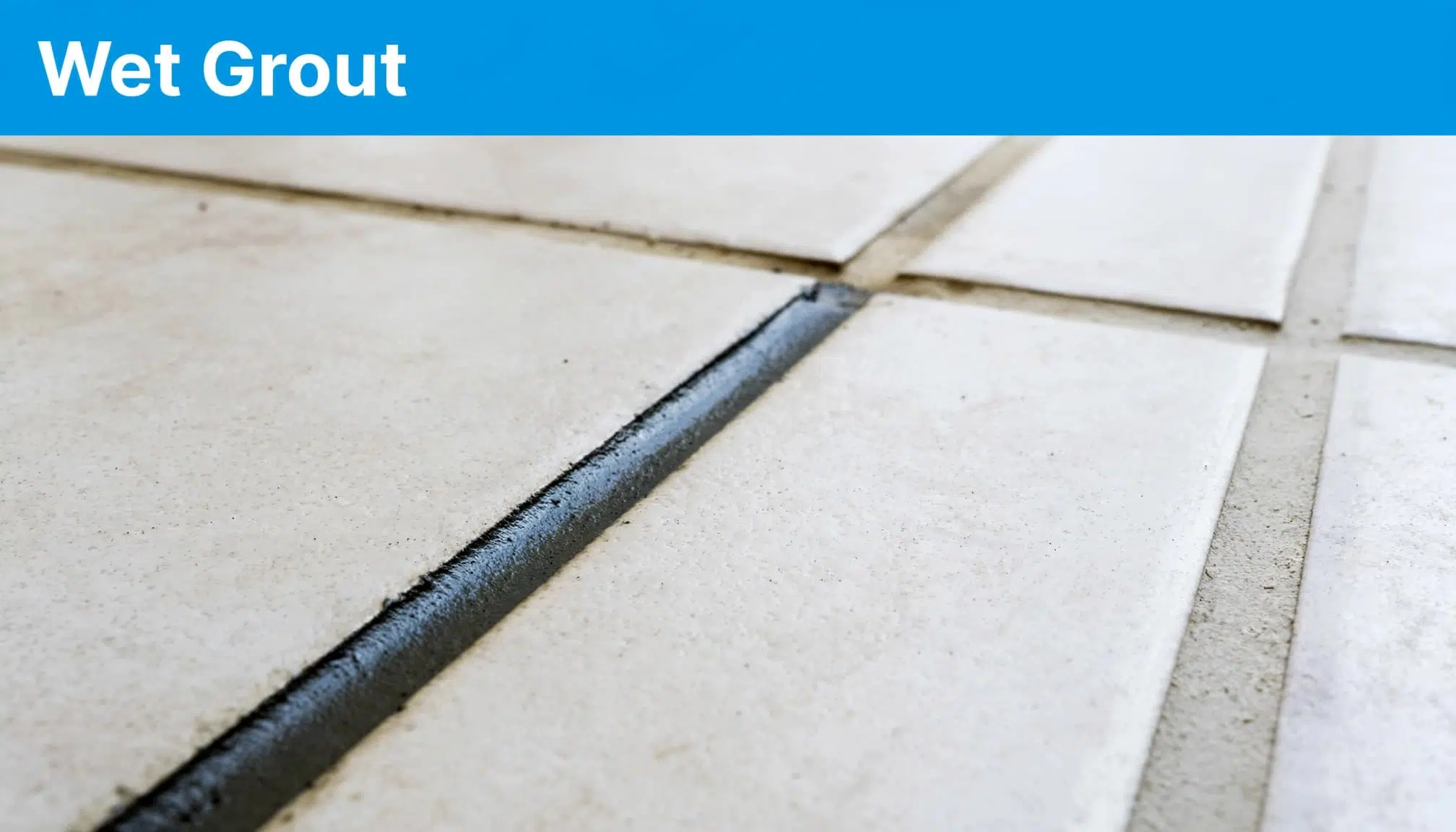
Water Changes How Porous Grout Looks
Standard cement-based grout contains small pores that absorb moisture. Water changes how light moves through the joint material, so the joint looks darker while damp.
Once the water evaporates, the lighter appearance returns. A temporary color change alone doesn’t mean the grout is dirty, defective, or growing mold.
The amount of darkening varies with the grout’s color, condition, and surface treatment. Untreated grout may absorb water quickly. Sealed grout may absorb it more slowly, although sealing doesn’t make a tile installation waterproof.
Compare the Same Joint Wet and Dry
Start with clean grout that has dried fully. Place a few drops of water on an intact joint and watch whether the water remains on top or soaks in.
Compare several locations, including a busy walkway and a protected area. Uneven absorption can indicate different wear levels or earlier repairs.
Afterward, let the joints dry without further wetting. There isn’t one evaporation time for every floor or shower. Humidity, ventilation, joint depth, and repeated water exposure all affect how long the joints take to dry.
We use the return to the original color as the main clue, rather than treating every dark joint as a problem.
When Grout Stays Dark After the Surface Dries

A dark patch that remains after nearby grout lightens needs a different approach. Surface soil, soap residue, a persistent grout stain, or trapped moisture below the tile may be responsible.
First, clean the affected area with a product suitable for the tile and grout. Rinse away cleaner residue, then leave the area undisturbed until fully dry. Avoid repeated wet cleaning while assessing the patch.
If it remains dark, look for its location and pattern. Water pooling near a drain, recurring damp corners, loose tiles, or damage on an adjoining wall can point to a drainage or moisture problem.
Water can remain in a mortar bed above a waterproofing membrane. Water behind or below the waterproofing may indicate a leak or installation failure. Dark grout alone cannot establish either diagnosis.
A sealer cannot correct trapped water, failed drainage, or a leak. Resolve the water source before changing the grout’s appearance.
Have a qualified tile or plumbing professional assess persistent wet areas. Covering them with colorant can hide a symptom without fixing the cause.
How Sealers Affect Wet Grout Color
Clear Penetrating Sealer Reduces Absorption
A natural-look penetrating sealer protects clean, sound grout while preserving its existing color. It reduces liquid absorption and gives you more time to remove spills before they stain. Sealer performance depends on grout type, application, wear, and exposure.
As MAPEI’s grout-sealing guidance explains, sealing requirements vary by grout type. Standard cement grout and epoxy grout don’t have the same needs.
If sealed grout now darkens quickly, its protection may have worn down. Our guide to signs of grout sealer failure explains the common patterns.
A water-drop test shows surface absorption. It doesn’t prove whether grout was ever sealed, identify the product, or establish that a shower is watertight.
Enhancer Sealer Deliberately Darkens Grout
A color-enhancing sealer is intended to deepen the appearance of compatible absorbent materials. It can leave grout with a lasting wet or dark look.
That effect differs from ordinary wet darkening. Waiting longer won’t return enhanced grout to its original shade.
If the color changed immediately after sealing and remains consistently dark, the applied product may explain it. Don’t keep adding sealer to correct the appearance. Removal or recoloring depends on the existing treatment and surface compatibility.
Installation Mistakes That Cause Uneven Color
Mixing Errors Can Affect the Whole Joint
Cement grout can cure with uneven color when its water content or preparation varies. Too much water in the grout mix, inconsistent partial-bag batches, and adding water after the initial mix can all cause problems.
Skipping the required slaking period also affects the result. Slaking is the rest period after mixing that allows the ingredients to wet properly before remixing.
The Tile Council of North America’s color-variation FAQ identifies mixing and installation practices as common causes of inconsistent grout color.
These problems may remain visible after the grout dries. Sealing won’t correct differences within the grout itself, although color sealing may improve sound, fully cured joints.
Cleanup and Early Use Can Change the Finish
Wiping too soon or using an overly wet sponge can introduce too much water at the surface. Dirty tools, sponges, or rinse water can also affect the finished color.
Follow the grout’s specified curing time; some products require up to three days before use. Foot traffic or wet exposure before the required cure is complete can change its appearance.
Curing and drying are different. A joint that looks dry may still be developing strength.
Keep a new installation out of service until its specified cure is complete. Don’t assess its final color while sections remain damp.
Tile, Joint Depth, and Dye Lots Also Matter
The surrounding material affects how cement grout loses moisture. Absorbent marble draws more water from grout than dense granite does. The same grout can therefore dry differently beside different stones.
Glazed tile edges can slow water loss and affect the final appearance. Self-spacing lugs create changes in joint depth that may show through as darker areas. Mortar or thinset adhesive left too high between tiles can reduce grout depth.
These patterns often follow tile edges or repeat across the installation. They won’t necessarily disappear with stronger cleaning.
Grout bags from different dye lots can also differ in color. For a large installation, check the lot numbers and use bags from the same lot, mixing consistently. Pigment differences between lots can contribute to a color difference.
Before committing to a grout color, make an on-site test area using the actual tile and grout. Assess it after curing under the room’s final lighting. Printed swatches, chip cards, and brochures aren’t reliable final color references.
Choose Cleaning, Color Sealing, or Repair
Clean and Prepare Before Selecting a Sealer
We recommend cleaning first because soil and soap film can make a sound joint look permanently discolored. Remove residue, complete repairs, and let the grout dry fully.
Choose clear sealing when the cleaned grout has an even color you want to retain. Clear sealer doesn’t hide existing stains.
Choose color sealing when the grout is structurally sound but remains blotchy, faded, or stained. Our grout color sealing services provide a more uniform appearance while adding surface protection.
A grout colorant generally works best on unsealed grout. Existing sealer or residues from oil-based soaps, such as Pine-Sol or Murphy’s Oil, can prevent bonding and make recoloring very difficult or impossible without suitable preparation.
Colorants Don’t Replace Grout Repairs
Grout colorants usually recolor and seal in one treatment. A separate penetrating sealer typically isn’t needed. MAPEI’s grout troubleshooting guide describes UltraCare Grout Refresh as an option for recoloring and sealing joints together.
Epoxy-based grout stains penetrate absorbent grout and seal the surface with permanent color. Other colorants use different formulations, so they aren’t all interchangeable.
Neither clear sealer nor colorant fills missing grout or stabilizes loose, crumbling joints. Repair or replacement comes first. Repeated cracking also needs its underlying cause addressed.
For new work requiring absolute color uniformity, epoxy grout is recommended over cementitious grout. It costs much more, but reduces the color variation associated with cement grout.
Frequently Asked Questions
Can Sealed Grout Still Darken When Wet?
Yes. Protection varies with the product, application, wear, and exposure. Some water-related darkening doesn’t automatically mean complete failure.
Rapid absorption across previously protected joints is a stronger reason to assess the sealer’s condition before applying another coat.
Should Porous Grout Get Clear Sealer or Colorant?
Use clear sealer when the grout dries to a clean, even color you like. Choose colorant when permanent discoloration remains after cleaning and the grout is sound.
Neither treatment should cover unresolved dampness or damaged joints.
Does Color-Sealed Grout Still Need Cleaning?
Yes. Color sealing reduces staining and makes maintenance easier, but dirt and soap film can still collect on the surface.
Use compatible cleaners and remove residue. If you use oil-based soaps, rinse thoroughly afterward. Abrasive cleaning and unsuitable chemicals can wear or damage the protective finish.
Start With the Drying Pattern
Grout that darkens with water and lightens fully is usually behaving as porous cement grout should. Persistent dark patches need their cause addressed before sealing or recoloring.
We recommend matching the treatment to the grout’s condition once it has been cleaned and fully air-dried. Use clear protection for even grout, color sealing for sound but discolored grout, and repairs for failing joints.
For tile cleaning and sealing in your home or office in Lee or Collier County, Get a FREE Quote.